
Empty-Box Movement in Pangkalpinang Seen as Symbol of Democratic Resistance
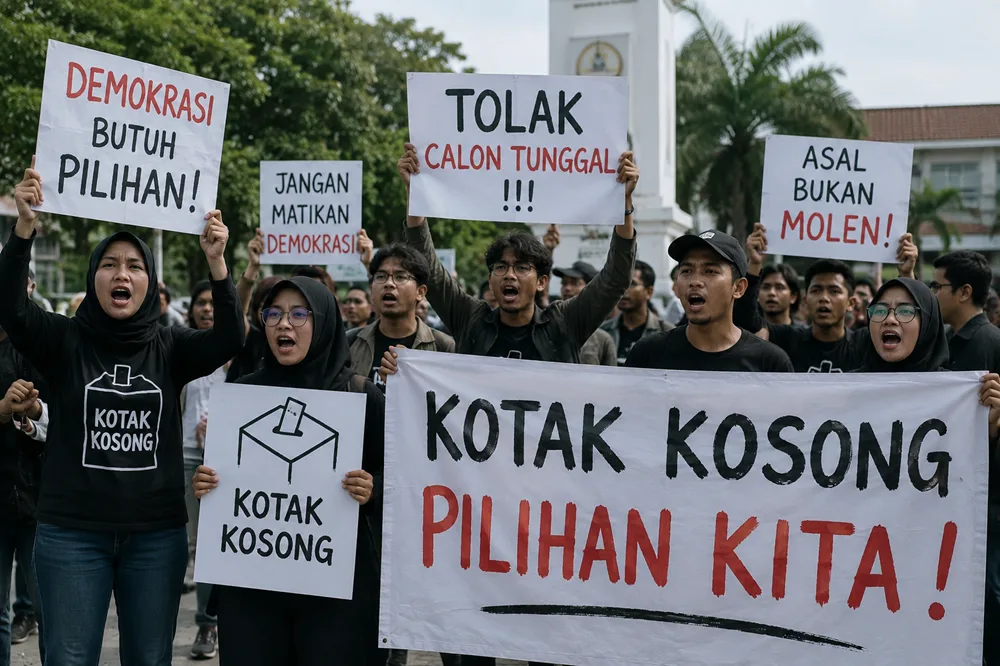
Pangkalpinang – A recent study published in the Jurnal Public Policy highlights how the empty-box voting movement in the 2024 Pangkalpinang mayoral election emerged as a symbol of democratic resistance against single-candidate dominance in local politics. The research argues that the movement reflected growing public dissatisfaction with elite-driven political arrangements and declining electoral competition.
The study, conducted by researchers from Universitas Bangka Belitung, examined how pro-democracy citizens mobilized support for the empty-box option during the local election. Researchers found that the movement developed organically through volunteer-based community networks rather than political party machines. Groups such as BOTAK (Barisan Oposisi Kotak Kosong), PKK (Partai Kotak Kosong), and Pemuda Pangkalpinang Bersuara became central actors in spreading the campaign across the city.
According to the study, mobilization efforts relied heavily on social solidarity, grassroots discussions, and digital communication platforms such as WhatsApp and social media. Volunteers from various backgrounds—including academics, activists, retirees, and housewives—participated in the campaign out of concern for democratic values and frustration with the lack of meaningful political alternatives.
Researchers noted that cultural messaging also played a major role in attracting public support. Popular slogans such as “Reject the Single Candidate” and “Asal Bukan Molen” (“Anything but Molen”) became widely circulated in everyday conversations and online discussions. The use of local humor, Bangka cultural expressions, and informal communication styles helped strengthen collective identity among supporters of the movement.
The paper argues that the rise of single-candidate elections in Indonesia is closely connected to political party cartelization, where parties unite behind one dominant candidate instead of competing against each other. As a result, voters are left with limited choices, potentially weakening democratic accountability and political pluralism.
Researchers also highlighted legal and institutional concerns surrounding the empty-box mechanism. Current electoral regulations, they noted, do not clearly define the legal status and campaign rights of the empty-box option, creating uncertainty and potential tensions after election results are announced. The study recommends reforms to strengthen internal party democracy, prevent candidate cartelization, and provide clearer legal recognition for empty-box voting in future elections.
Despite these challenges, the Pangkalpinang case demonstrates that citizens still possess the capacity to organize democratic resistance through electoral mechanisms when formal political competition becomes limited.
Source: Hidayat, N., Nugroho, S., & Herza, H. (2026). The Politics of Mobilizing Pro-Democracy Citizens in the Empty-Box Voting Movement in the 2024 Pangkalpinang Local Election. Journal Public Policy, 12(2), 235-240.