
Folklore-Based Tourism Names in Bangka Belitung Preserve Cultural Identity, Study Finds
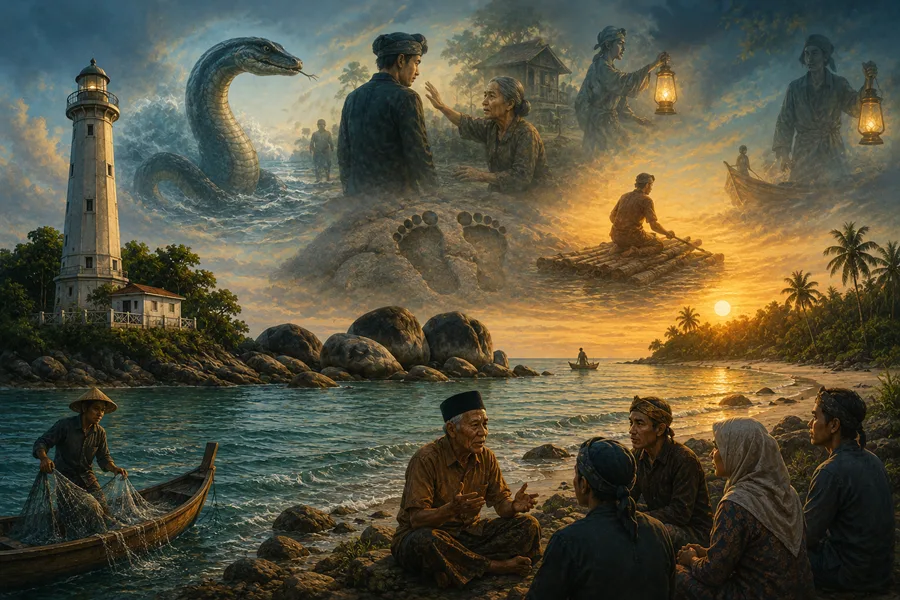
Bangka — A recent study by researchers from Universitas Bangka Belitung found that the names of several tourist attractions in Bangka Belitung are deeply rooted in local folklore and continue to shape the cultural identity of coastal communities.
The study, titled Exploring Local Mythology: Folklore Naming of Tourist Attractions in Bangka Through Narrative Structure, was published in the SIGEH ELT: Journal of Literature and Linguistics in March 2026. Researchers Rizky Arif Afandi, Sandy Ferianda, Tsasa Vina Febiola, and Tia Ayu Susanti examined how myths and oral traditions influence the naming of tourist destinations in West Bangka, Central Bangka, and South Bangka.
Using a descriptive-interpretive qualitative approach, the researchers conducted field observations and semi-structured interviews with 12 local residents, including fishermen, tour guides, tourism managers, and community elders.
The study focused on tourist attractions such as Mercusuar Mentok, Batu Balai, Pantai Tanjung Ular, Pantai Tapak Antu, Pantai Lampu, and Pantai Batu Berakit. According to the researchers, these names function not only as geographical markers but also as narrative symbols containing moral lessons, ecological awareness, and spiritual beliefs passed down through generations.
One of the stories highlighted in the study is the legend of Batu Balai in West Bangka. Local folklore tells of a young man named Awang who denied his mother after becoming wealthy overseas. In response, his mother cursed him into stone. The researchers interpreted the story as a moral warning against forgetting one’s origins and family ties.
Another example is Pantai Tanjung Ular, whose name originates from stories about a giant sea serpent believed to guard the coastal environment. Local residents consider the serpent a spiritual protector and a warning sign before storms.
The study also examined Pantai Lampu in South Bangka, where fishermen believe mysterious lights appearing at sea are the spirits of sailors guiding ships away from danger. Researchers said the folklore reflects the close spiritual relationship between coastal communities and the sea.
To analyze these stories, the researchers applied Russian folklorist Vladimir Propp’s narrative theory and Edward Said’s postcolonial perspective. Through this approach, they identified recurring narrative patterns such as prohibition, punishment, struggle, recognition, and reward within the folklore surrounding Bangka’s tourist destinations.
The researchers argued that these narratives represent more than cultural heritage. They also function as a form of symbolic resistance and a way for local communities to reclaim cultural identity amid colonial legacies and modern tourism development.
According to the study, integrating folklore into tourism promotion could strengthen sustainable tourism strategies in Bangka Belitung. Researchers suggested that story-based tourism, or “storynomics tourism,” could create more meaningful experiences for visitors while preserving local traditions and collective memory.
Source: Afandi, R. A., Ferianda, S., Febiola, T. V., & Susanti, T. A. (2026). Exploring local mythology: Folklore naming of tourist attractions in Bangka through narrative structure. SIGEH ELT: Journal of Literature and Linguistics, 6(1), 850–870. https://doi.org/10.36269/sigeh.v6i1.4778