
Islamic Traditions in South Bangka Found to Strengthen Social Harmony and Environmental Awareness
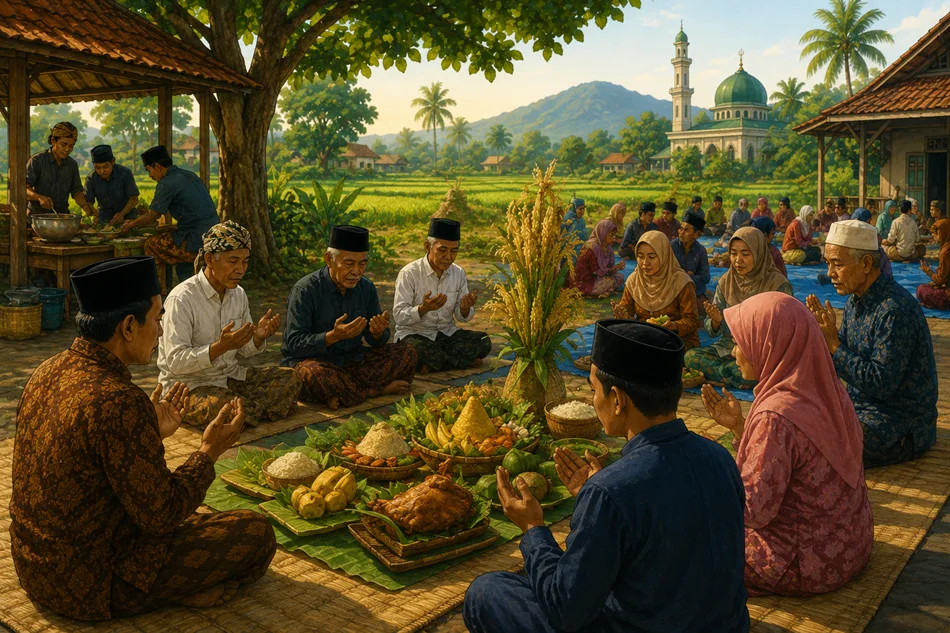
Pangkalpinang – A recent study has found that Islamic traditions practiced in Rias Village, South Bangka Regency, play an important role in strengthening social cohesion, promoting environmental awareness, and supporting sustainable agricultural practices among ethnically diverse transmigrant communities.
The research, conducted by Reza Adriantika Suntara, Muhamad Hijran, & Tri Indrayati from Universitas Bangka Belitung, was published in the 2026 edition of Fikri: Jurnal Kajian Agama, Sosial dan Budaya.
The study examined how Islamic traditions such as Sedekah Bumi, Maulid Nabi, and Ruwahan function not only as religious rituals, but also as expressions of “civic virtue,” a concept referring to citizens’ willingness to prioritize collective welfare, solidarity, and social responsibility.
Researchers explained that Rias Village has developed into a multicultural agricultural settlement inhabited by ethnic Bangka Malays, Javanese, Bugis, and Sundanese communities following transmigration programs implemented since the 1960s and 1980s.
According to the study, ethnic diversity initially created differences in farming methods, lifestyles, and social interaction patterns. However, shared Islamic traditions gradually became a unifying platform that encouraged cooperation and reduced social tensions among residents.
One of the central traditions highlighted in the paper is Sedekah Bumi, an annual communal ceremony held after harvests or before planting seasons as an expression of gratitude and collective prayer for future agricultural success. The tradition involves shared meals, mutual cooperation, and participation from residents of various ethnic backgrounds.
Researchers noted that the ceremony reflects values of empathy, solidarity, and gotong royong or mutual cooperation, which strengthen social trust and help prevent discrimination within heterogeneous communities.
The study also found that Islamic traditions contribute to ecological awareness. Residents believe that caring for agricultural land is both a moral responsibility and a form of gratitude to God, encouraging sustainable farming practices and collective management of irrigation systems.
Data from the research showed that farmer associations in Rias Village help coordinate irrigation schedules, planting periods, equipment sharing, and fertilizer distribution to improve harvest quality and minimize environmental risks.
Researchers further observed that these traditions function as informal civic education for younger generations. Children and youth are involved in preparing communal events, participating in prayers, and assisting with village activities, allowing moral values such as responsibility, sincerity, and social concern to be passed down through daily practice.
Despite the positive impacts, the study warned that modernization and digitalization pose challenges to preserving local traditions. Younger residents were found to be increasingly less involved in communal activities due to shifting interests toward urban employment and digital lifestyles.
The researchers concluded that Islamic traditions in Rias Village demonstrate how local wisdom can strengthen multicultural integration, environmental stewardship, and food security in rural communities. The study also emphasized that civic virtue is not limited to formal political participation, but can emerge through everyday cultural and religious practices rooted in local traditions.
Source: Reza Adriantika Suntara, Muhamad Hijran, & Tri Indrayati. (2026). The Role of Islamic Tradition as a Civic Virtue in Environmental Management of Rice Farming in Transmigration Settlements. Fikri : Jurnal Kajian Agama, Sosial Dan Budaya, 11(1), 244–257. https://doi.org/10.25217/jf.v11i1.7331