
Bridging Marine Paradise and Cultural Heritage: How Social Networks Drive Tourism Growth on Buku Limau Island
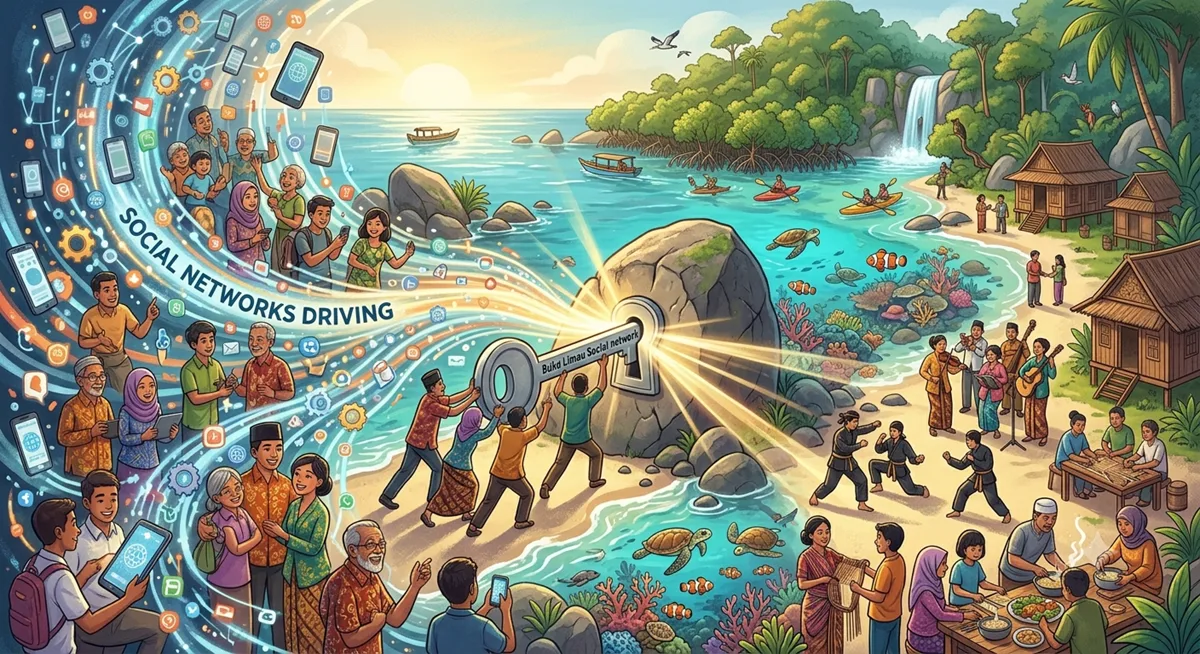
EAST BELITUNG, As traditional tin resources face depletion across the Bangka Belitung Islands Province, local authorities and scholars are accelerating a strategic transition toward sustainable tourism. Among the province’s 401 tourism destinations, Buku Limau Island that is located in the Manggar Subdistrict of East Belitung Regency—stands out as a primary candidate for eco-cultural transformation.
A comprehensive study conducted by researchers from Universitas Bangka Belitung—Putra Pratama Saputra, Novyandra Ilham Bahtera, and Laila Hayati—delves into how Social Network Analysis (SNA) can unlock the full economic and social potential of Buku Limau Island by connecting key government, business, and community stakeholders.
A Synergy of Pristine Marine Ecosystems and Bugis Maritime Tradition
Buku Limau Island is part of an archipelago consisting of 18 small islands, with marine and aquatic areas making up approximately 70 percent of its territory. The island possesses extraordinary natural assets, including extensive white sandy beaches, lush coastal mangrove forests featuring vatica and dipterocarpus trees, and exceptionally clear waters ideal for diving and snorkeling.
The surrounding waters harbor vibrant coral reef ecosystems that serve as habitats for diverse ornamental fish species, such as Siganidae, Pteridae, and Labradae. Notably, local fishermen refrain from capturing these ornamental species, allowing marine biodiversity to flourish naturally.
Beyond its natural beauty, Buku Limau Island’s cultural identity is deeply rooted in the heritage of the Bugis ethnic community, who overwhelmingly inhabit the island. Demonstrating impressive environmental adaptation, residents convert seawater into fresh water to fulfill daily domestic needs. The local economy relies heavily on sustainable fisheries, producing an estimated 936 tons of dried fish and 468 tons of fresh fish annually. Local authorities are working to integrate these traditional salted fish processing methods into the broader cultural tourism experience.
Mapping Stakeholder Collaboration Through Social Network Analysis
To evaluate the strength of institutional synergies, the research team employed a mixed-methods approach using UCINET 6 software to perform Social Network Analysis (SNA) across 10 key actor groups. These stakeholders include the Department of Culture and Tourism, the Regional Planning and Development Agency (Bappeda), the Department of Marine and Fisheries, the Tourism Awareness Group (Pokdarwis), village administration, business operators, cultural observers, and the local public.
Using three structural network indicators, the study evaluated how effectively information and policies circulate through the local tourism ecosystem:
1. Degree Centrality (Popularity and Activity)
Pokdarwis Pulau Buku Limau emerged as the dominant network hub, achieving an In-Degree score of 6.000 and an Out-Degree score of 8.000.
This high centrality demonstrates that Pokdarwis is both the most active sender and receiver of information regarding tourism development on the island.
Other institutional actors, such as the Village Government (In-Degree: 4.000) and the Department of Marine Affairs and Fisheries (Out-Degree: 3.000), maintain secondary roles in communication.
2. Closeness Centrality (Proximity Across Network Nodes)
Pokdarwis recorded the lowest closeness value at 13.000 (with an InCloseness score of 69.231 and OutCloseness of 90.000), indicating its direct proximity to nearly all other stakeholders in the network.
In contrast, accommodation and restaurant operators recorded higher farness scores (19.000–21.000), highlighting their relative distance from central planning discussions.
3. Betweenness Centrality (Strategic Intermediary Role)
Pokdarwis scored the highest betweenness centrality at 63.000, confirming its indispensable role as a bridge for communication between government bodies and local community members.
Addressing Strategic Gaps to Unlock Long-Term Value
Despite the active core network led by Pokdarwis, the SNA sociogram revealed noticeable structural gaps. Connections remain weak or absent between critical agencies—such as between Bappeda and the Department of Manpower, Cooperatives, and SMEs, as well as between the Department of Marine Affairs and Fisheries and the general public.
The researchers emphasize that achieving sustainable empowerment on Buku Limau Island requires solidifying collaboration across three essential pillars: the local government, private entrepreneurs, and the local community. Enhancing interdepartmental communication and supporting Pokdarwis with formal policy backing will ensure that tourism growth directly boosts local living standards while preserving Bugis maritime traditions and coastal ecosystems.
Source: Saputra, P. P., Bahtera, N. I., & Hayati, L. (2024). The development of natural and cultural tourism in Buku Limau Island based on social networking. Jurnal Kepariwisataan: Destinasi, Hospitalitas dan Perjalanan, 8(1), 55–70. https://doi.org/10.34013/jk.v8i1.1363
Image Source: The cover image is an AI-generated image.