
Time Doesn't Heal All Barriers: Long-Term Residence Fails to Eradicate Intercultural Communication Challenges for Indonesian Migrant Workers in Taiwan
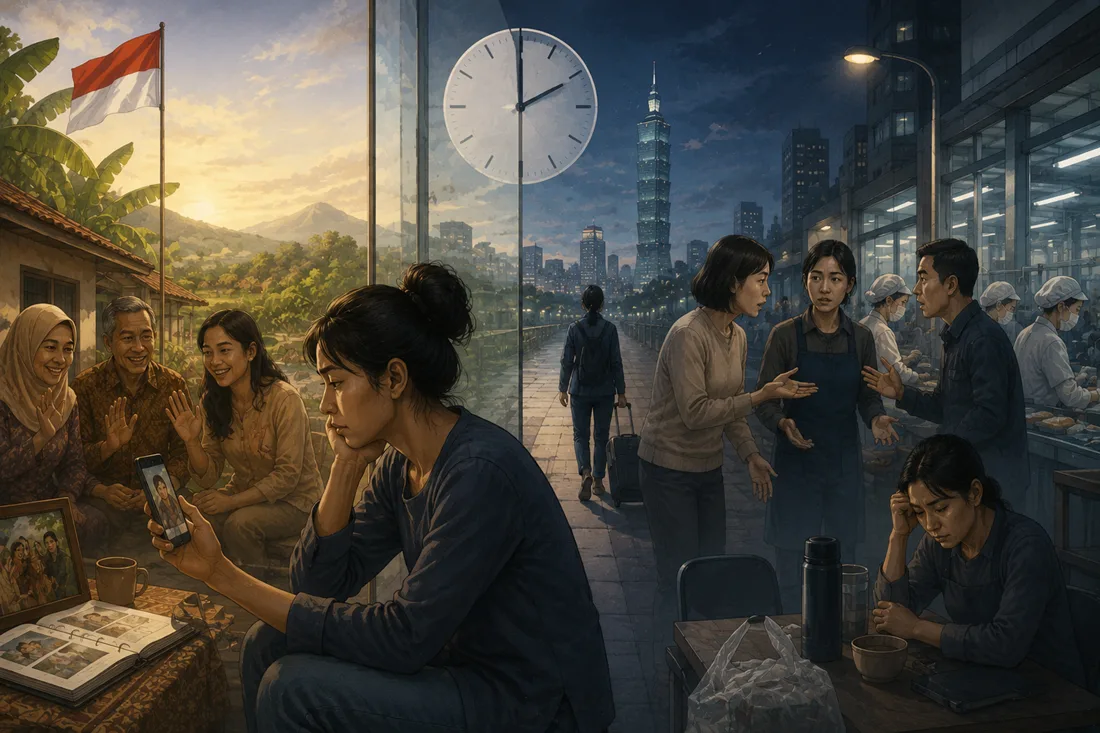
JAKARTA— Does living in a foreign country for more than a decade automatically turn you into a flawless intercultural communicator? A groundbreaking qualitative study suggests otherwise.
The research, published in the prestigious linguistics journal LingPoet, reveals that prolonged stay does not necessarily eliminate intercultural communication challenges for Indonesian migrant workers in Taiwan. Instead, these cultural friction points simply evolve over time, with deep-seated differences in religion, language literacy, and nonverbal cues persisting even after tenures spanning over 10 years.
Conducted by researchers Sofa Priyandayani Nasution from Universitas Bangka Belitung, Siti Isma Sari Lubis from Universitas Negeri Padang, and Armita Novriana Rambe from Politeknik Negeri Bengkalis, the study offers vital insights into the reality of cultural adaptation and workplace integration in East Asia.
The Myth of the 'Linear Adaptation' Model
For years, traditional expatriate theories implied a direct correlation between the length of stay and a person's intercultural communication competence (ICC). However, by interviewing 11 Indonesian migrant workers (6 females and 5 males) across the caregiving, maritime, and corporate sectors who have survived in Taiwan for over a decade, the researchers shattered this narrative.
"Intercultural communication competence is better conceptualized as a dynamic and continuous process shaped by interaction, lived experience, and structural factors, rather than length of stay alone," the researchers wrote.
The study outlines four major domains where structural and cultural boundaries remain stubbornly rigid, alongside one area that shows significant improvement.
Four Persistent Pillars of Cultural Friction
1. Religious Practices as an Unresolved Frontier
With Muslims forming the overwhelming majority of Indonesian migrants and Taiwan's demographic leaning heavily toward Buddhism (21.3%) and non-religious status (13%), daily religious duties remain a highly sensitive negotiating point.
Migrants reported ongoing difficulties executing daily prayers or attending monthly religious studies at major transit hubs like Taipei Main Station. One caregiver recounted how her employer originally banned her white prayer garments because it frightened the family's grandchild. While time fostered compromise—switching to colored garments—the structural strain of practicing Islam in non-Muslim households remains high.
2. The Literacy Deficit in Language Adaptation
While 10+ years of local immersion naturally improved verbal proficiency and listening comprehension, written literacy emerged as a permanent barrier. Participants noted that because Mandarin utilizes a character-based writing system rather than an alphabet, they remain heavily reliant on Google Translate or local friends when navigating crucial text-heavy environments like hospitals, reading medication labels, or finding street addresses.
3. Food Customs and the Halal Uncertainty
Dietary restrictions present a constant exercise in compromised trust. Maritime workers (shipmates) explained that because their meals are provided entirely by employers, they are forced to simply trust that the food is pork-free because they lack cooking facilities. Caregivers living in domestic environments expressed anxiety over using the same pots, pans, and utensils that had previously cooked non-halal meals, fearing that purchasing separate cooking gear might offend their employers.
4. Misinterpreting Nonverbal Communication
Subtle, context-heavy cultural rules in Taiwan are slow to master. Migrants detailed early social blunders, such as wearing a taboo black dress to an employer's birthday party or inadvertently sticking chopsticks upright into a bowl of rice—a gesture that symbolizes death in Taiwanese culture. Even corporate workers reported initial confusion over unspoken office norms, such as the expectation to stay past formal working hours to show company loyalty.
The Silver Lining: Improving Interpersonal Trust
Despite the friction points, the study highlighted that interpersonal relationships between Indonesian workers and their Taiwanese employers dramatically improve over time. Prolonged interaction builds deep familial trust, mutual care, and open communication channels.
To survive and bridge the existing cultural gaps, Indonesian workers actively deploy clever adaptive strategies, including:
Clarification and Active Negotiation: Proactively explaining Islamic concepts (like why fasting during Ramadan does not mean they will faint, or why they cannot drink beer).
Host Culture Learning & Participation: Directly joining local festivities like the Dragon Boat Festival, the Moon Festival, and Chinese New Year to build stronger societal bonds.
A Call for Systemic Cultural Inclusivity
The findings from Universitas Bangka Belitung and its partner institutions send a clear message to policymakers and migrant agencies alike: pre-departure training seminars are often too theoretical to prepare workers for real-world nuances.
True integration cannot rest solely on the shoulders of individual migrant workers trying to adapt. To fully harness the power of international labor mobility, institutional frameworks must step up to create systemically inclusive environments that respect and accommodate the diverse identities of the global workforce.
Source: Nasution, S. P., Lubis, S. I. S., & Rambe, A. N. (2026). Does long-term residence mitigate intercultural communication challenges? Insights from migrant workers in Taiwan. LingPoet: Journal of Linguistics and Literary Research, 7(2), 262-272. https://doi.org/10.33019/society.v11i2.660